
When researchers in California asked 62 people to lie down and simply listen to singing bowls, gongs and bells, the participants reported feeling noticeably less tense, angry, tired and low afterwards. The people who had never tried it before felt the biggest drop in tension of all. That’s a sound bath in a nutshell: an hour where your only job is to rest and listen, and where beginners have a head start. No water is involved, there are no poses to learn and there’s no wrong way to do it, which is exactly why it appeals to people who find meditation hard.
A meditation where sound does the guiding
Cleveland Clinic describes a sound bath as an experience where you’re immersed in deep sound vibrations. The name comes from that feeling of sound washing over you. A facilitator plays instruments with long, resonant tones while you lie still, and because the sound gives your attention somewhere to land, your mind tends to wander less than it would in silence.
The instruments, and the mystery of the singing bowl
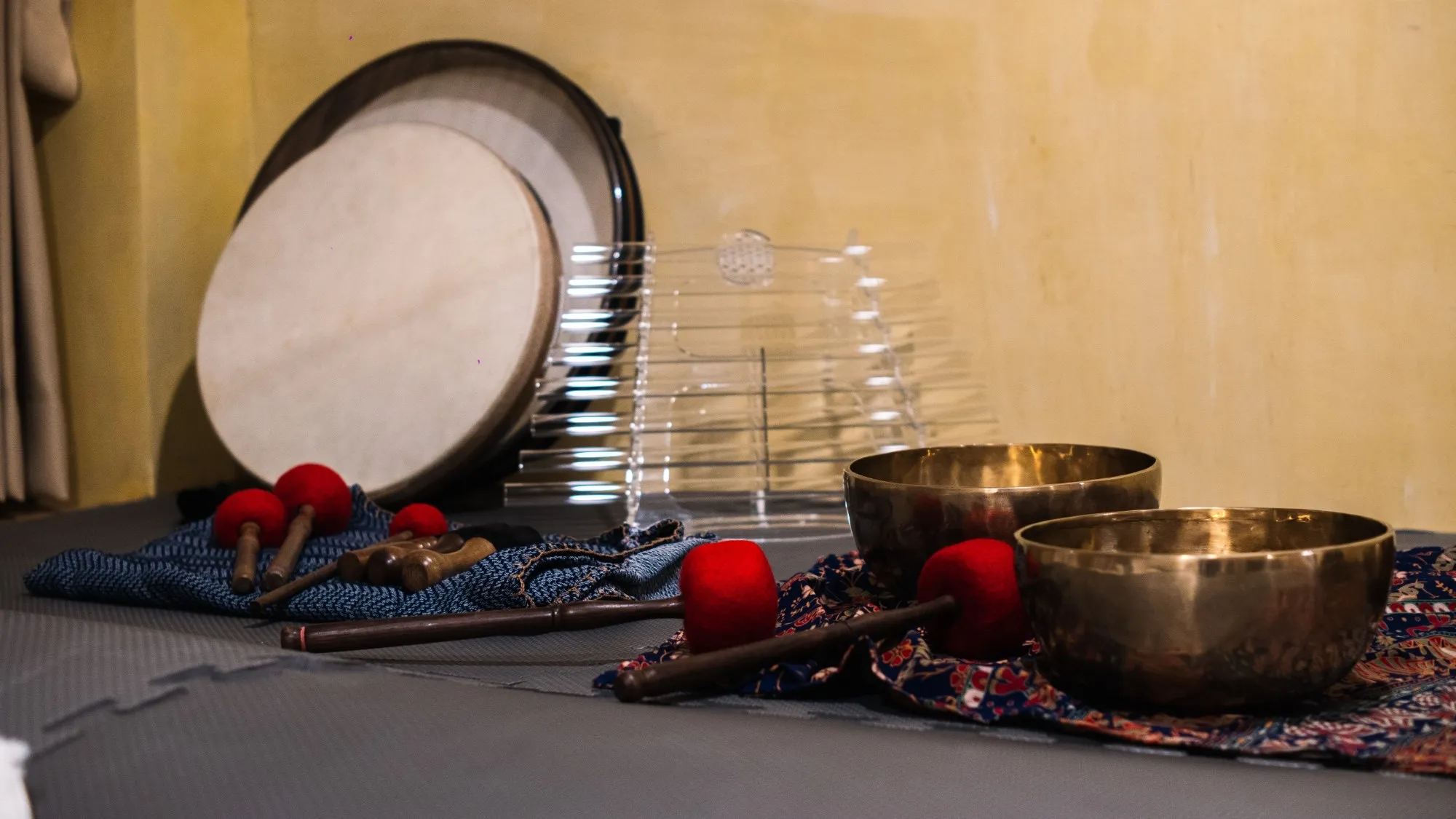
The star of most sound baths is the singing bowl, a metal bowl that’s struck or circled around the rim with a mallet until it hums with a long, layered tone. Tibetan singing bowls are usually made from a combination of metal alloys and are traditionally linked to spiritual ceremonies of Tibetan monks, though their exact origins are still debated, with Nepal and Tibet both part of the story.
Alongside metal bowls, many sessions use crystal singing bowls, a gong or chimes. A gong in particular produces a deep, rolling wash of sound that you can feel in your body as much as hear, and because no two people play an instrument the same way twice, no two sound baths are ever quite alike.
What you actually do for the hour
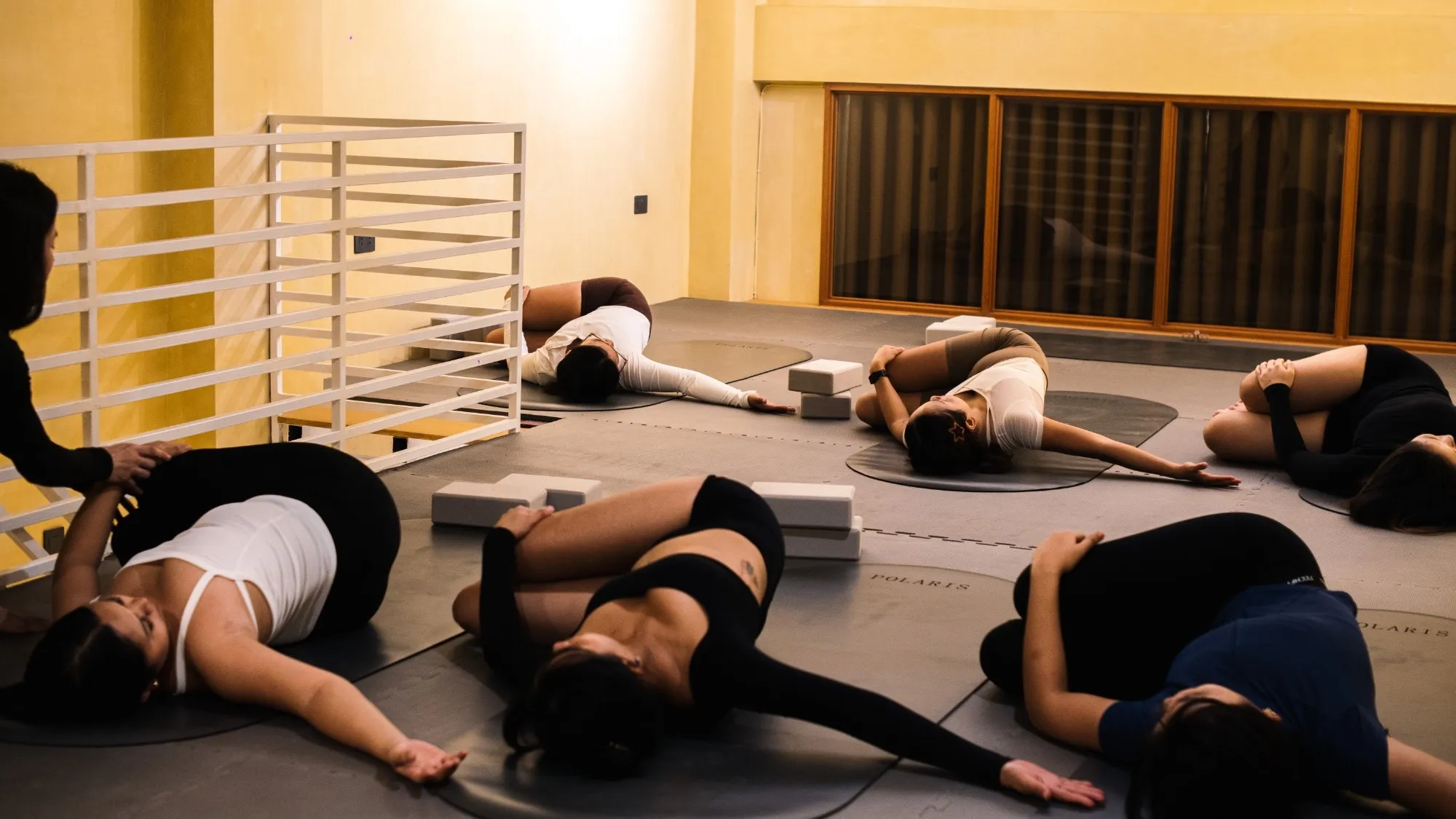
You settle onto a mat, usually lying on your back, and the facilitator opens with a few words to help you arrive. Then the sound begins, sometimes soft and spacious, sometimes full enough to fill the whole room. There’s nothing to achieve. If your mind wanders, let it, and drift back to the sound when you notice. If you fall asleep, you’re in good company: Tamara Goldsby, who led the research above, says it’s very common for participants to nod off, sometimes to the point of snoring.
If lying flat is uncomfortable for your back, a rolled blanket under your knees or lying on your side can help, and it’s always worth mentioning pregnancy or any health condition to the facilitator beforehand.
What the research says so far
The early findings are encouraging, and the field is young. The 2017 study above was observational, with no comparison group, and its authors described singing bowl meditation as a feasible, low-cost and low-technology way to reduce feelings of tension, anxiety and depression. Cleveland Clinic notes that there isn’t much research yet into the science behind sound baths and that they shouldn’t replace any medical treatment. The fairest way to think of a sound bath, then, is as a deeply relaxing practice to add to your week alongside movement, sleep and time outdoors.
How to prepare for your first session
- Dress warm and soft. Your body cools as it settles, so wear comfortable clothes and bring a layer.
- Arrive a little early. It gives you time to find your spot and let your breathing slow before the first bowl rings.
- Eat lightly. A small snack keeps hunger from pulling at your attention without making you too full to lie down.
- Silence your phone. Better still, leave it in your bag for the whole hour.
After the last tone fades
Take your time coming back. Roll to one side, sit up slowly and have some water before you stand. Many people feel calm, pleasantly heavy or simply rested afterwards, so keep the next hour gentle if you can, which is why evening sessions are such a lovely way to end a day. If a sound bath leaves you curious about other slow practices, Pilates or yoga: how to choose is a good next read, and a slow weekend in San Fernando, La Union shows how a sound bath can close out two unhurried days by the sea.
At Polaris, sound baths happen in a quiet room set aside for the singing bowls, and no experience is needed to join one.