
One of these practices took shape over thousands of years in ancient India. The other was refined in a First World War internment camp on the Isle of Man and grew up in a New York studio that drew dancers looking to recover from injuries. Today they sit side by side on studio schedules, both on a mat, both asking you to breathe on purpose, and it’s easy to assume they’re two versions of the same thing. Their very different histories explain why they feel so different once you’re inside the class, and those differences are the most useful guide to choosing where to start.
Two very different family trees
Yoga is an ancient and complex practice rooted in Indian philosophy. It began as a spiritual practice and has become popular as a way of promoting physical and mental well-being, with modern classes usually combining postures, breathing techniques and meditation. Over its long history it has branched into many styles, which is why one yoga class can feel slow and meditative while the next leaves you dripping.
Pilates is barely a century old. Joseph Pilates, born in Germany in 1883, was a sickly child with asthma and rickets who built himself up through gymnastics and bodybuilding. He called his method Contrology, a name that captures his belief in using the mind to control the muscles, and in the mid-1920s he and his wife Clara opened a studio in New York City. Here’s a detail that makes this whole comparison more interesting: according to Britannica, yoga was among the disciplines the young Joseph Pilates practiced on his way to building his method.
What each practice feels like from the inside
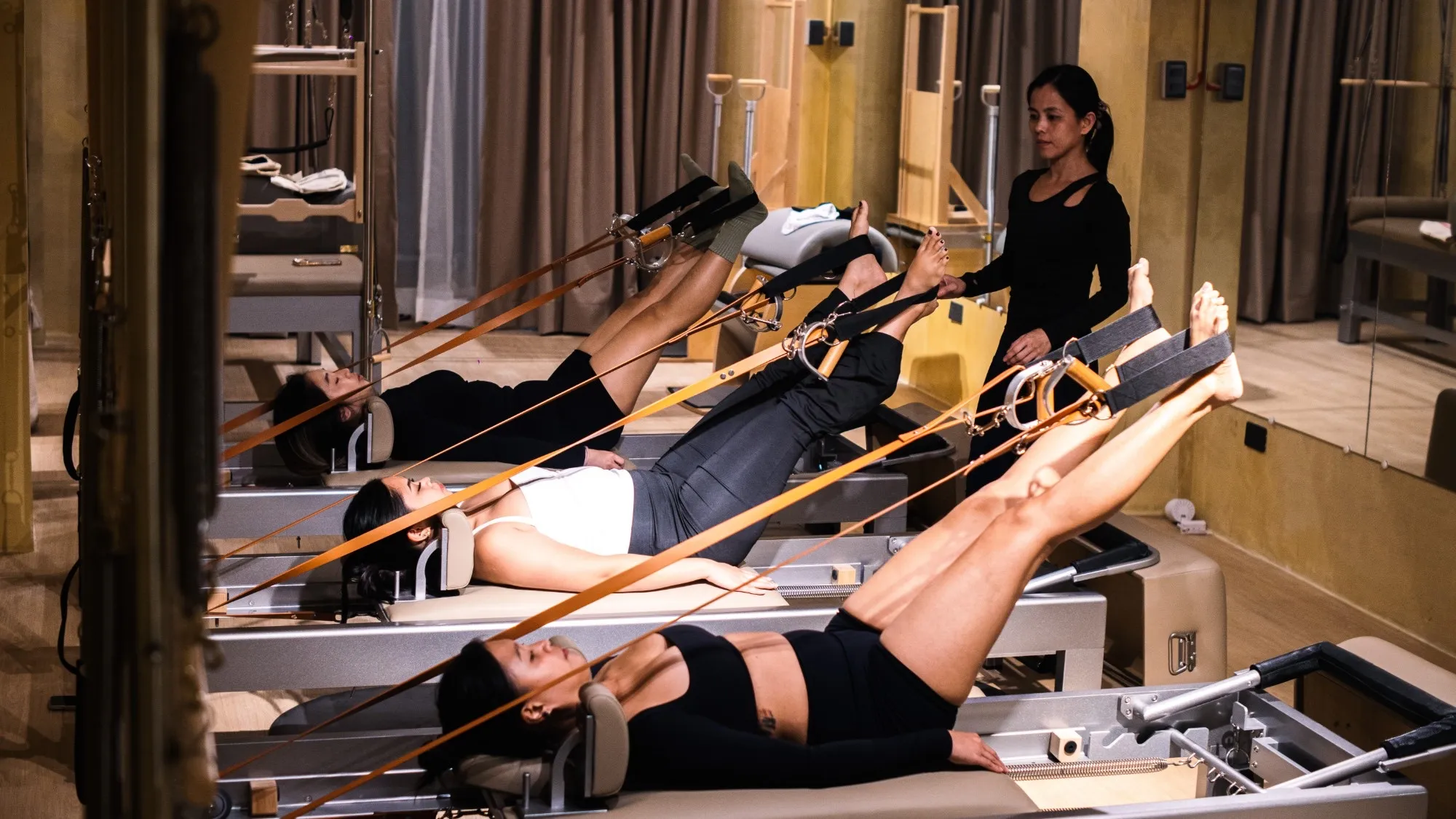
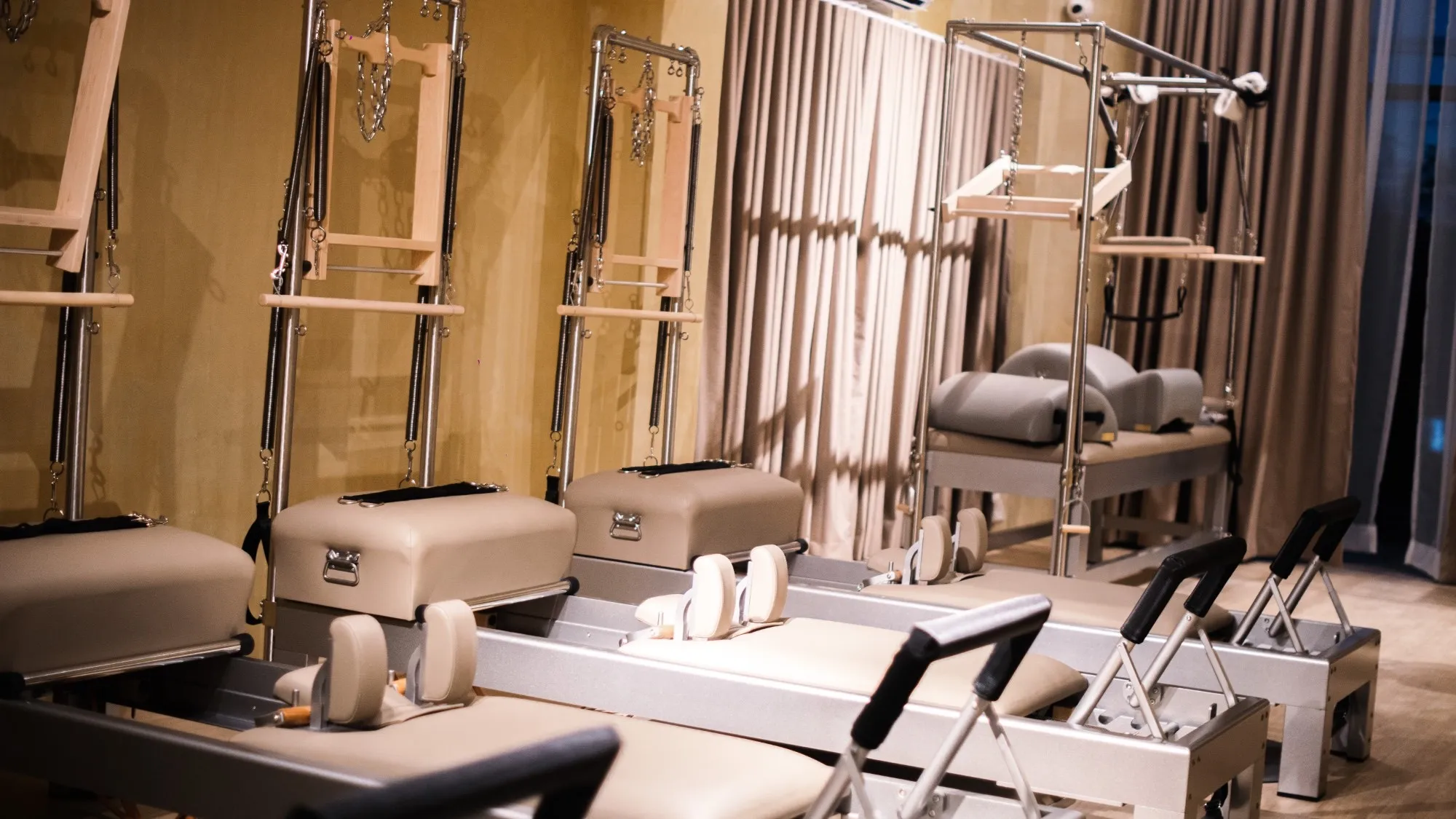
A Pilates class moves at a steady, deliberate pace. You’ll do a small number of repetitions of each exercise, with close attention to alignment and to the deep muscles around your middle. From across the room the movements can look modest, and from inside your body the core is usually burning by the third or fourth rep. Classes happen on a mat or on spring-loaded equipment like the reformer, and they tend to run 45 minutes to an hour.
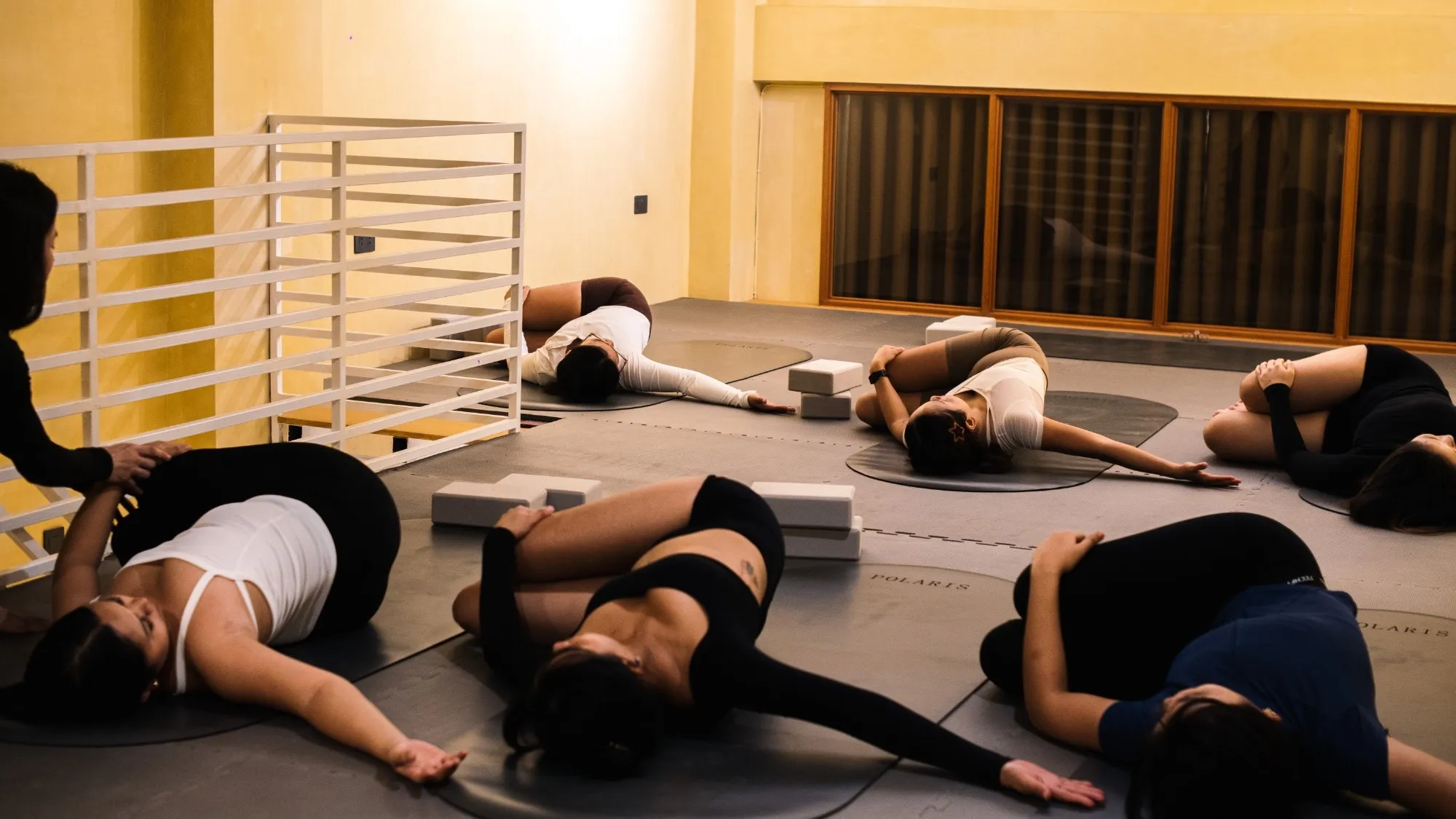
A yoga class is shaped around breath and posture. Depending on the style, you might hold poses for several breaths, flow from one into the next or settle into long stretches on the floor, and most classes close with a few quiet minutes of rest. A few of the styles you’re most likely to see on a schedule:
- Hatha: a steady class with poses held for a few breaths, and a welcoming place to learn the foundations.
- Ashtanga: a set sequence practiced in the same order every time, moving briskly from one posture to the next.
- Vinyasa: flowing sequences that link each movement to an inhale or an exhale, so the class feels like a moving meditation.
- Yin: slow, floor-based poses held for several minutes at a time, giving the body time to soften.
Strength, flexibility and breath: where each one shines
Both practices build strength and flexibility, and they arrive by different routes. Pilates puts your core at the center of every exercise and uses your arms and legs to load it, which is why the method is so closely linked with posture and control. Cleveland Clinic lists increased flexibility, muscle tone and strength among its potential benefits, with a particular focus on core strength.
Yoga tends to spend more time on mobility, balance and the link between breath and movement, and the meditation built into most classes gives it a strong calming side. MedlinePlus notes that yoga may help you relax, reduce stress, and improve your concentration and sleep.
Even the breathing feels different. In Pilates you’ll usually breathe wide into the sides and back of your ribcage while your abdominals stay engaged, often exhaling on the hardest part of a movement. In yoga the breath tends to set the rhythm that carries you from pose to pose, and some classes include breathing practices of their own.
Four questions that point you to the right first class
- What do you want more of this month? If the answer is strength, stability and a stronger middle, start with Pilates. If it’s stretch, stillness and a quieter head, start with yoga.
- Do you enjoy structure or flow? Pilates and Ashtanga reward people who like precise, repeatable sequences. Vinyasa and Yin suit people who like to follow their breath and feel their way through.
- How do you like to be taught? Small-group Pilates, especially on equipment, gives you close attention on every exercise. A yoga class often has a lovely shared energy and a little more room to move at your own pace.
- How is your body feeling? If you’re working around an injury or a health condition, talk to your doctor first and let your teacher know before class.
Why so many people end up doing both
The two practices complement each other beautifully. The core control you build in Pilates gives yoga poses a steadier base, and the mobility and breath awareness you build in yoga help Pilates movements flow more easily. Considering that yoga was part of Joseph Pilates’ own early training, pairing them brings Pilates back to one of its own starting points.
A simple way to decide is to try one this week and the other next week, then notice which one you find yourself looking forward to. If Pilates wins, what to expect at your first reformer Pilates class walks you through the hour, and if you’re curious about something even slower, what is a sound bath? is a good next read.
At Polaris, Pilates, yoga and sound therapy share one roof on Mabini St. in San Fernando, so trying both is as simple as walking into a different room.