
The machine you’re about to meet has one of the strangest origin stories in fitness. During the First World War, Joseph Pilates was held at Knockaloe, an internment camp on the Isle of Man that housed around 23,000 men. The story passed down in Pilates circles says he began rigging springs to hospital beds there so that bedridden internees could keep moving. Historians can’t fully confirm the bed-spring detail, but the idea at its heart lives on in every reformer: springs that let a body move, get stronger and feel supported all at once. Here’s what that feels like when you lie down on one for the first time.
Meet the machine: carriage, springs, footbar and straps
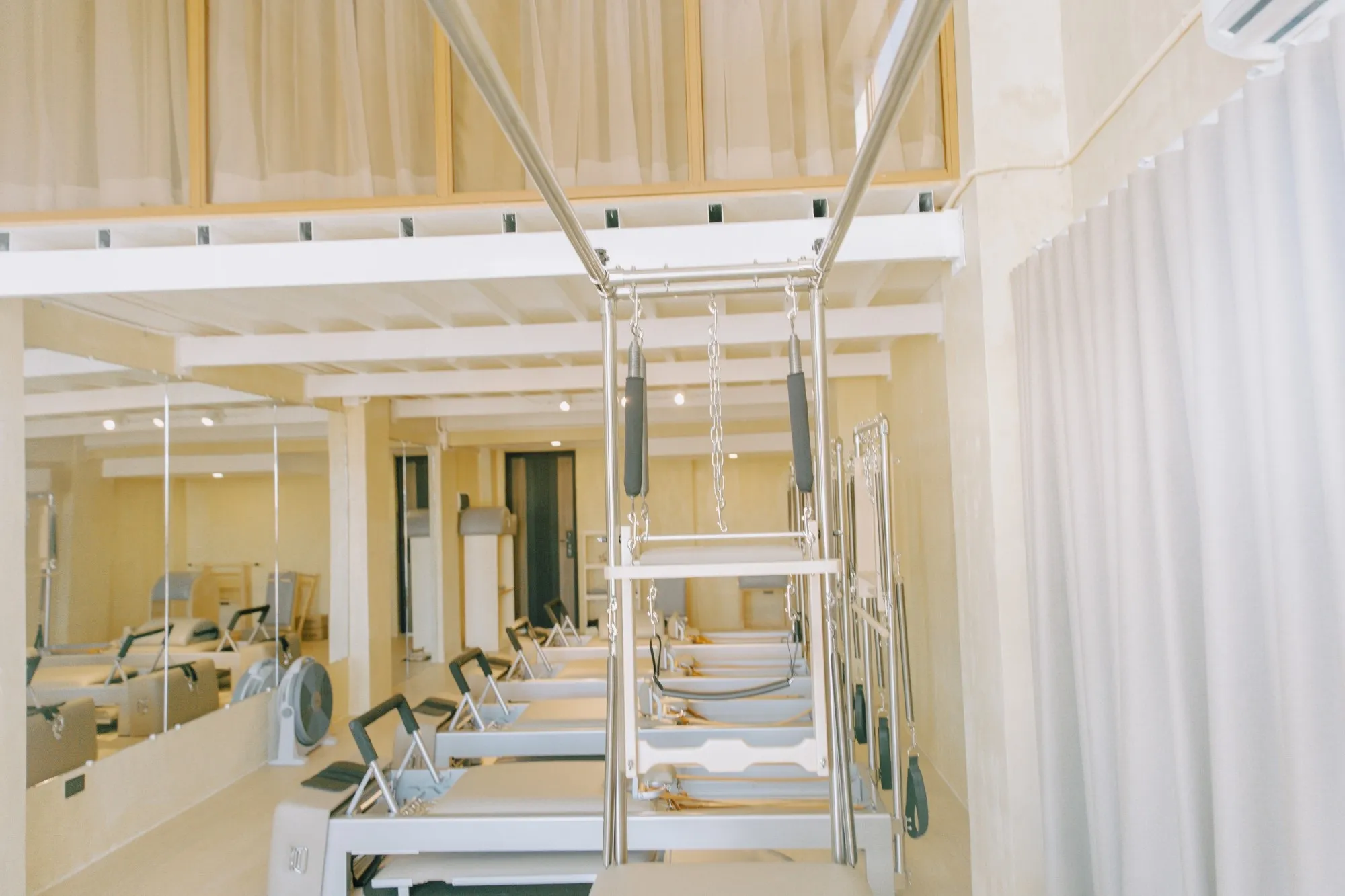
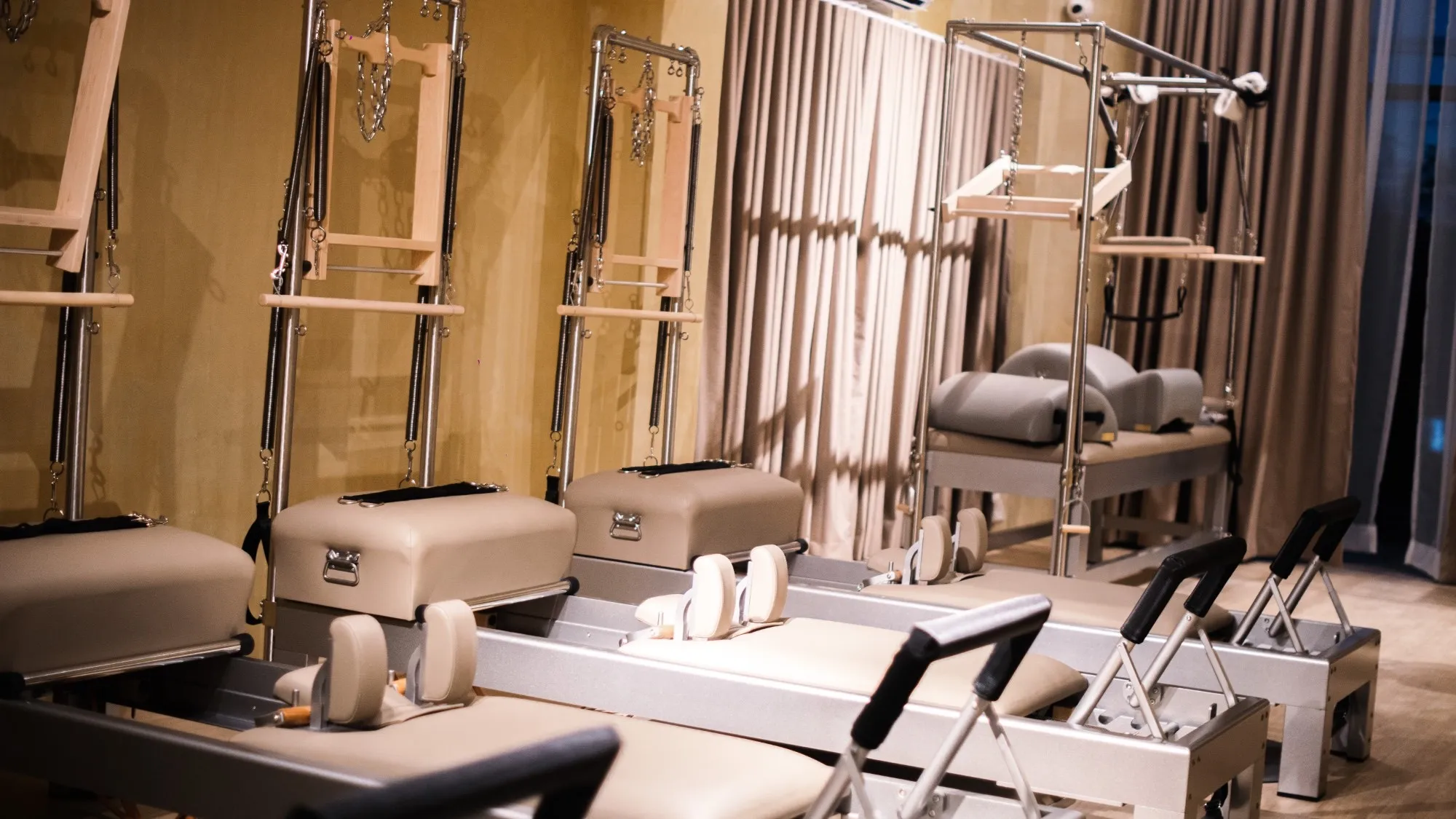
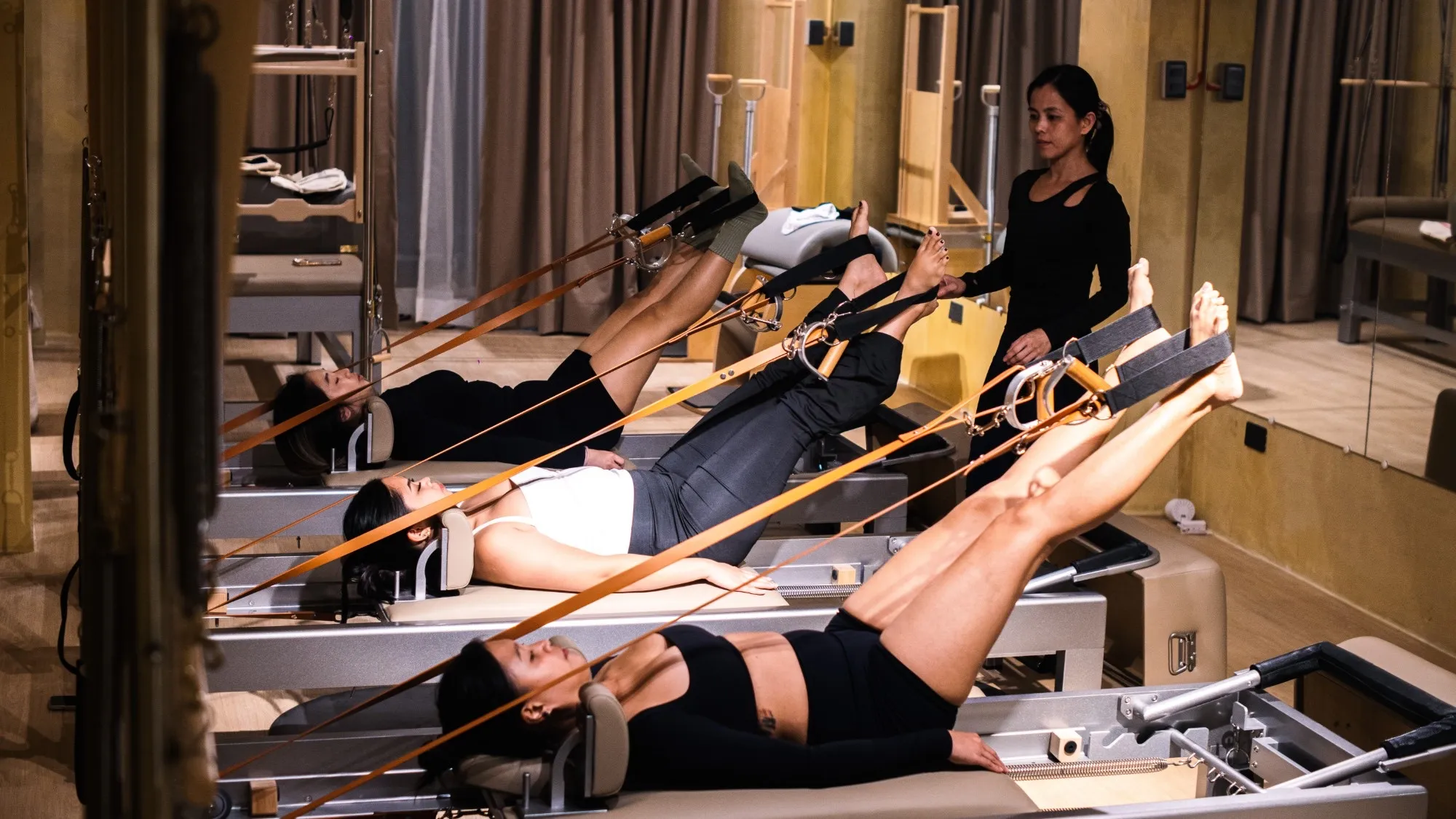
Joseph Pilates went on to patent the apparatus that became the Universal Reformer, the name it still carries in classical studios. The padded platform you lie, kneel or sit on is the carriage, and it rolls along a pair of rails inside the frame. Underneath, a row of springs links the carriage to the frame, and these are what you work against. At one end sits the footbar, which you press into with your feet or hands, and at the other end hang long ropes with straps for your hands or feet.
It looks technical for about five minutes. Once you’ve pressed the carriage out and felt it glide home a few times, the reformer starts to feel like a partner that responds to every small shift in your effort.
Why springs make hard things possible and easy things surprisingly hard
The springs work in two directions at once. They give you resistance to push and pull against, and they also hold some of your weight, which is why movements that would feel out of reach on the floor become doable on day one. Your instructor changes the spring setting between exercises, and here’s the part that surprises most beginners: a lighter setting can make some exercises harder. With less tension, the carriage moves more freely, so your core has to work harder to keep it steady and smooth.
That’s also why the way you bring the carriage back matters as much as the way you push it out. Letting the springs draw you home slowly asks your muscles to stay switched on through the whole movement, and a loud clunk at the end of a rep is the reformer’s gentle way of saying slow down.
How a typical beginner class unfolds
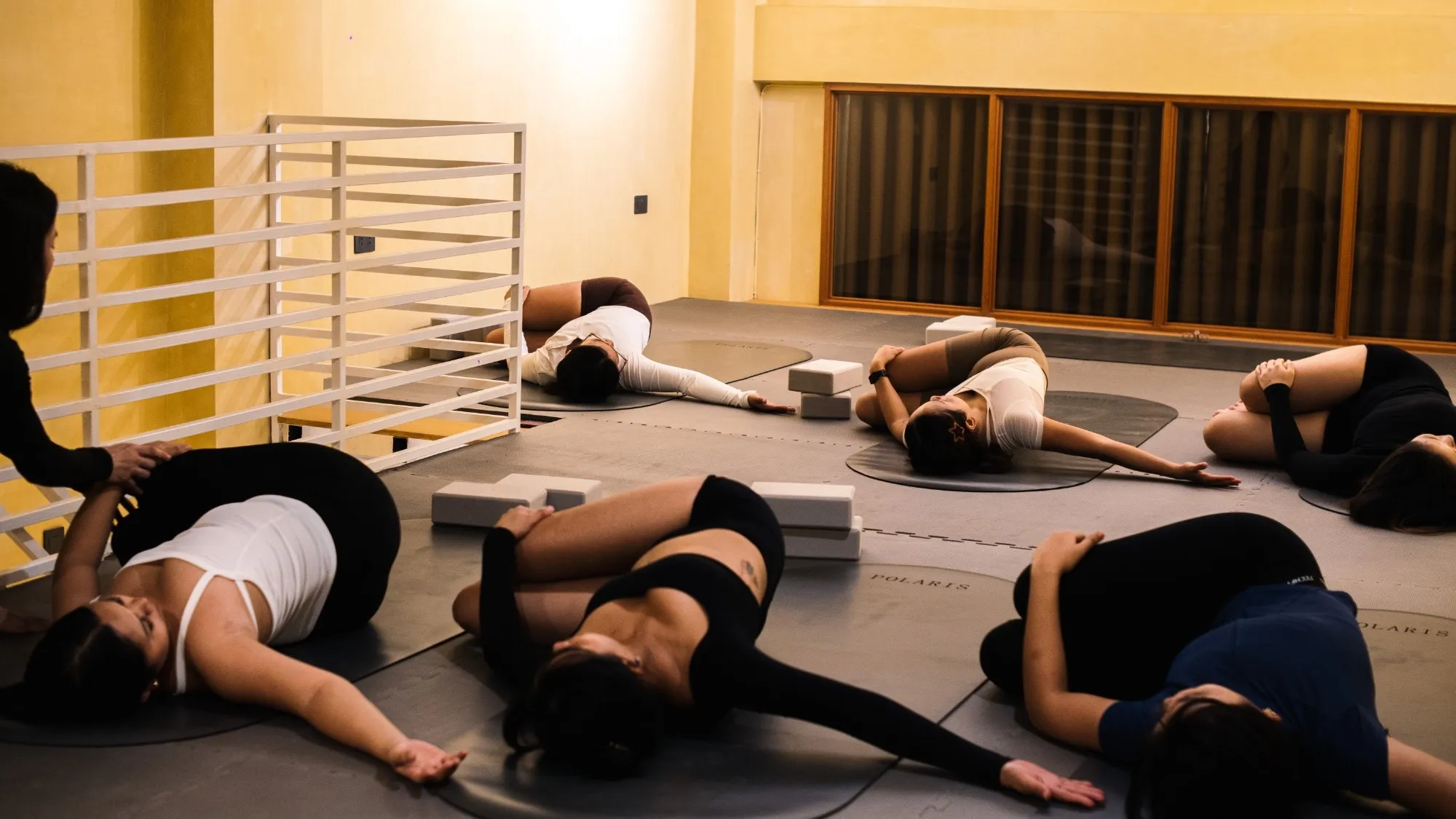
Most Pilates classes last somewhere between 45 minutes and an hour. Beginner reformer classes often open with you lying on your back for footwork, a series of presses against the footbar that warms up your legs and gets you used to the glide. In classical Pilates, which follows a set order, that’s typically followed by the Hundred, a breathing and core exercise, before the class moves through your abdominals, legs, arms and back, often with the straps. A stretch usually closes things out, so you leave feeling long and loose.
You’ll hear some new vocabulary along the way, words like “imprint” and “powerhouse”. Our guide to Pilates terms for beginners translates them into plain language, and reading it beforehand makes the cues click much faster.
Small things that make a first class feel easy
Fitted clothes help your instructor see your alignment, and anything with zips or buckles is best left at home because it can catch on the straps. Grip socks are part of every class at Polaris because they help your feet stay steady on the footbar and carriage, and you can pick up a pair at the studio if you don’t have one yet. Bring water, arrive a little early so there’s time to learn how to step on and off the carriage safely, and let your instructor know it’s your first class and whether you have any injuries. For a full head-to-toe checklist, see what to wear to Pilates, yoga and sound therapy.
The day after: what your body is telling you
Right after class, most people feel some mix of warm, tall and slightly wobbly, especially through the legs and middle. Over the next day or two you may notice muscles you rarely think about, deep in your core, along your inner thighs and around your hips. That gentle soreness is a normal response to new movement and tends to ease as your body adapts. Drink water, take an easy walk, and give the reformer a few sessions before deciding how you feel about it, because it gets more comfortable with every visit.
If you’re managing an injury or a health condition, check with your doctor or physical therapist before you start. Private sessions, including clinical Pilates, let you work one-to-one at your own pace. And if you’re still deciding whether to begin on the machine at all, reformer vs mat Pilates compares the two side by side.
At Polaris, reformer classes are kept to four people, so your instructor can guide you through every spring change on that first day.