
Pilates comes with its own vocabulary, and your first class can sound a little like a language lesson. Within ten minutes you might be asked to imprint, work from your powerhouse, stand in Pilates stance and control the carriage on the way home, all while lying on a machine you’ve only just met. Everyone starts by copying the person next to them, and that works perfectly well. Learning a handful of these words before you arrive simply helps the cues click sooner, so you can spend the hour feeling the work instead of decoding it.
The reformer parts you’ll hear named in the first five minutes
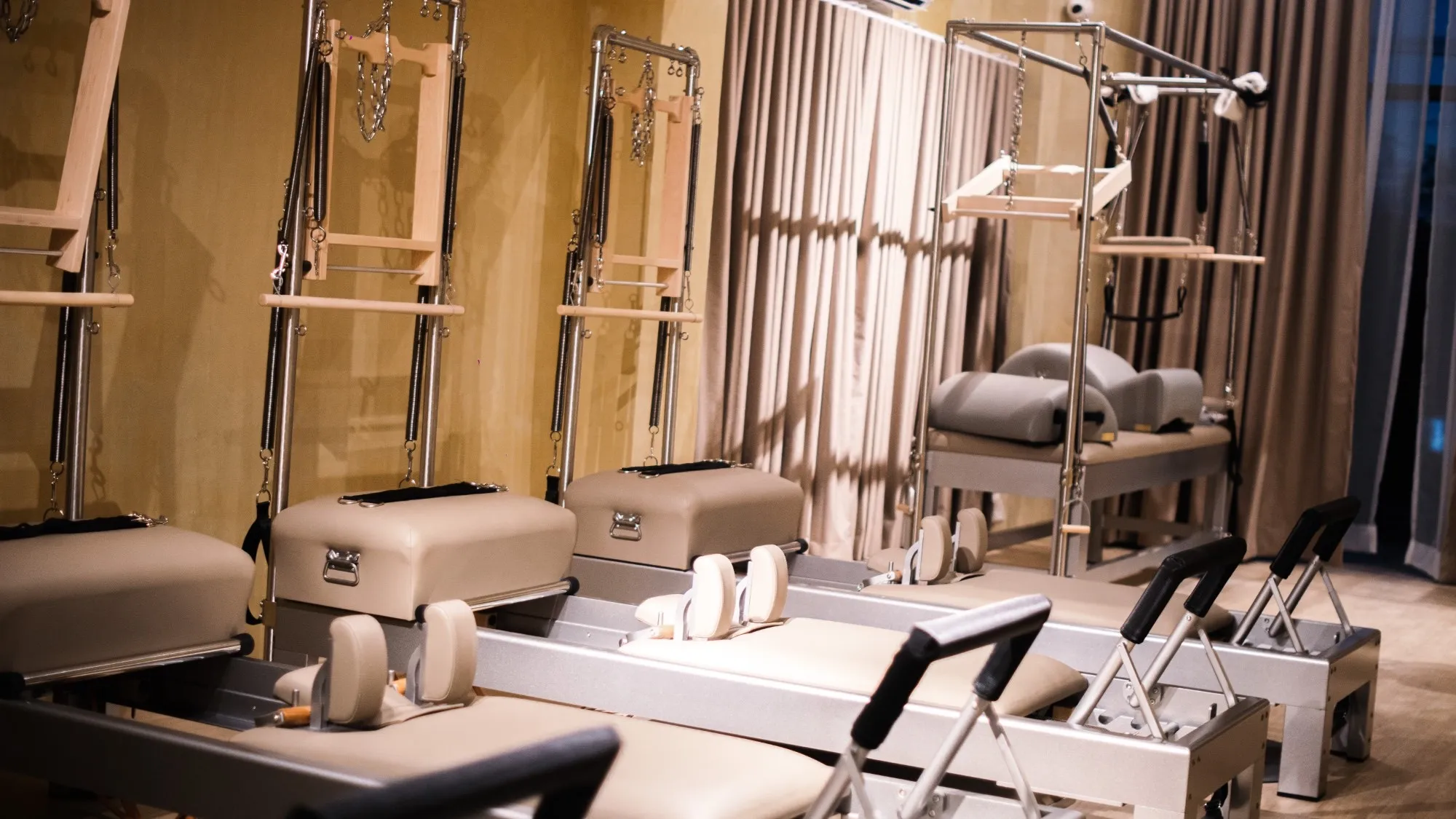
Carriage. The padded platform you lie, sit or kneel on. It slides along rails inside the frame, and most cues describe moving it out or bringing it home.
Springs. The coils that attach the carriage to the frame and create resistance. They’re usually color-coded by strength, though the colors vary between brands, and your instructor will tell you which ones to use for each exercise. Because the springs also support you, the setting changes how an exercise feels as much as how hard it is.
Footbar. The padded bar at the end of the reformer that you press against with your feet or hands. Its height can usually be adjusted.
Headrest and shoulder rests. The headrest supports your head and can often be raised or lowered. The shoulder rests, sometimes called shoulder blocks, sit on either side of your neck and keep you from sliding off the carriage when you push away.
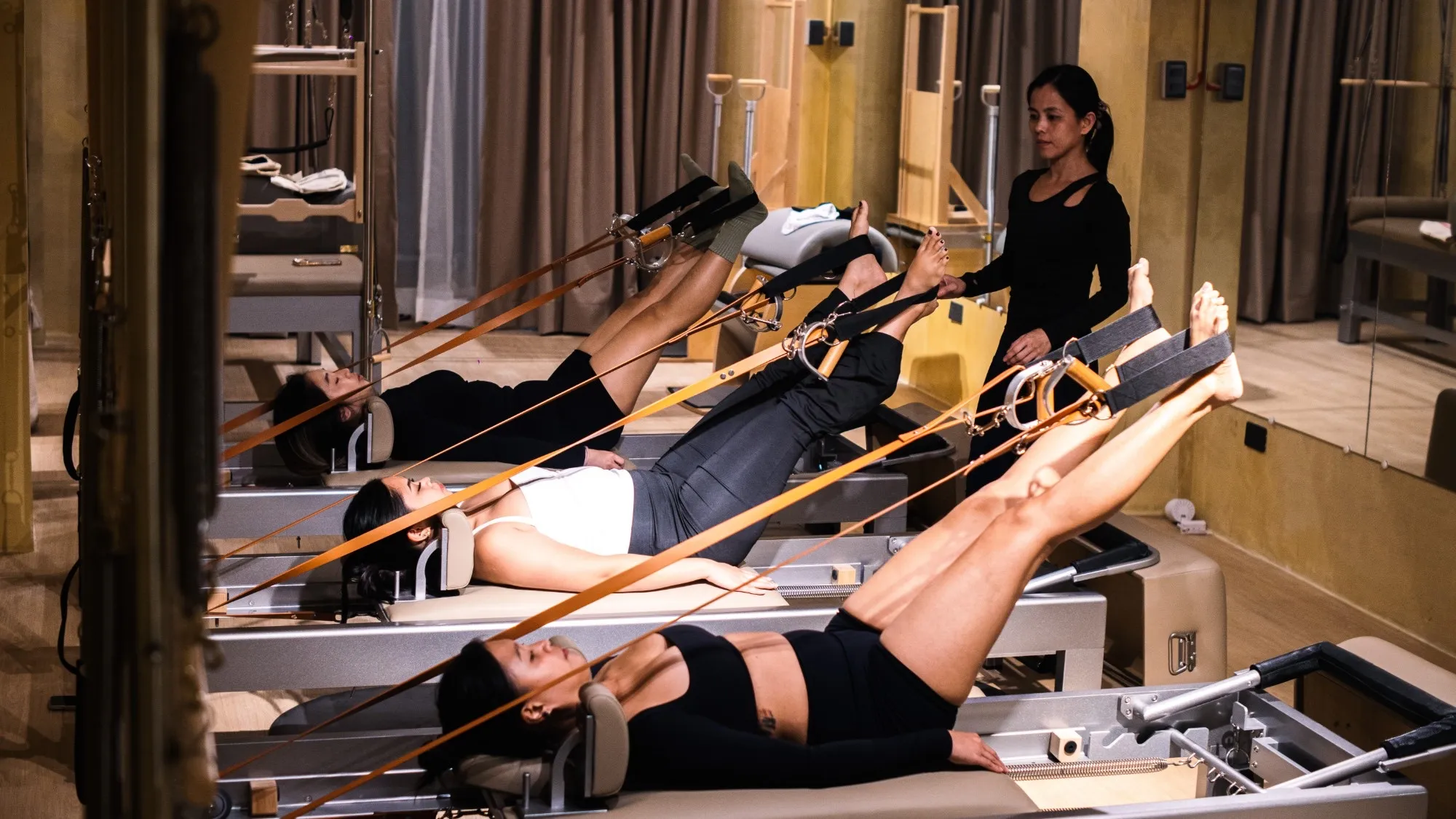
Straps. Loops or handles at the end of long ropes, held in your hands or placed around your feet. Arm and leg work in the straps usually comes once you’re warmed up.
Box. A padded box placed on top of the carriage. You’ll sit on it for seated work or lie along it for exercises that strengthen your back.
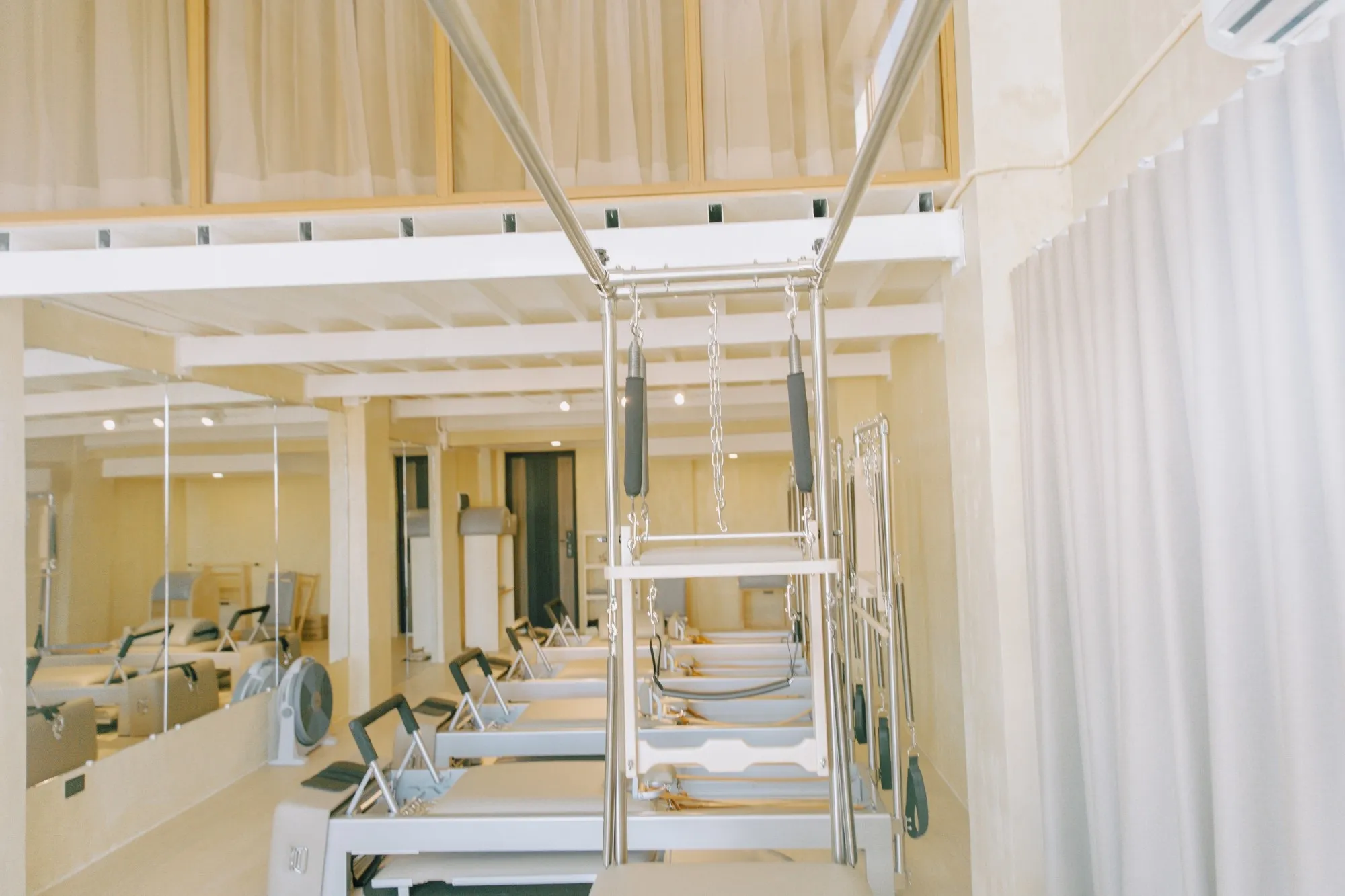
Tower. A frame with springs and bars mounted above a mat, a close cousin of the reformer. On it you’ll hear about the push-through bar and the roll-down bar, which you push or pull against as you move.
Cues your instructor will repeat, and what they ask of your body
Powerhouse. Joseph Pilates’ word for the center of the body, covering your abdominals, lower back, hips and glutes. “Work from your powerhouse” means letting these muscles start and steady each movement.
Scoop. Drawing your abdominals in and up, as if you were making space between your belly and your waistband. “Navel to spine” points to a similar feeling.
Neutral spine. Keeping the natural curves of your spine, with a small space under your lower back when you lie down. Your hip bones and pubic bone sit level, like a flat triangle.
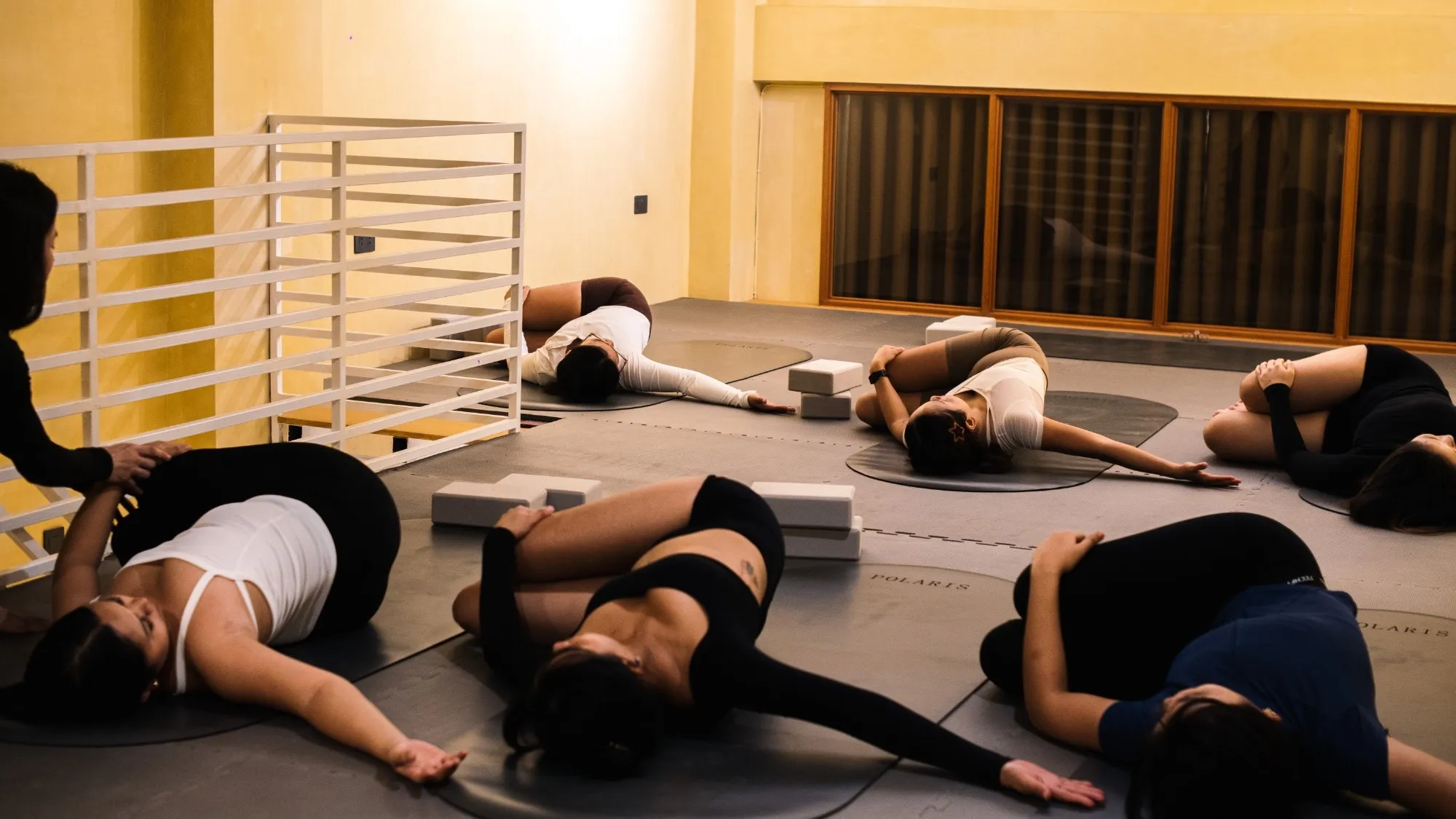
Imprint. Gently tilting your pelvis so your lower back moves closer to the mat. It’s often used when your legs are lifted, to give your spine extra support.
Articulate. Moving your spine one vertebra at a time, as in a roll-down or a bridge, so it peels and stacks smoothly.
Control the return. Bringing the carriage back slowly so the springs never snap it home. A loud clunk at the end of a rep is the reformer’s way of asking you to slow down.
Lengthen. Reaching through the crown of your head, your fingertips or your toes so your body stays long while it works.
Ribs down. Softening your lower ribs and drawing them gently together, so your back stays calm when your arms reach overhead.
Positions that show up in almost every class
Pilates stance. Heels together and toes slightly apart in a small V, with the backs of your legs gently hugging together. It’s a signature of classical Pilates.
Parallel. Legs hip-width apart, with knees and toes pointing straight ahead.
Tabletop. Lying on your back with your knees bent at about 90 degrees and stacked over your hips, so your shins are parallel to the floor.
C-curve. The rounded spine shape you’ll use in rolling and seated exercises, made by scooping your belly and curling forward.
Heels, toes and arches. In footwork, your instructor will ask you to place different parts of your foot on the footbar. “Toes” usually means the balls of your feet, with your heels lifted.
Breathing words, from lateral breath to the Hundred
Lateral breathing. Breathing wide into the sides and back of your ribcage, so your abdominals can stay engaged while you inhale. It takes most people a few classes to find, so give yourself time.
Exhale on effort. A common cue that pairs your out-breath with the hardest part of an exercise. Your instructor may vary the pattern, and the most important thing is to keep breathing.
The Hundred. A classic warm-up and one of the first exercises in Joseph Pilates’ 1945 book, Return to Life Through Contrology. You pump your arms while breathing in for five counts and out for five counts, ten times through, which adds up to one hundred pumps.
Every class makes the language feel more like your own
Nobody expects you to know these words on day one, and a good instructor will show you each position and call out every spring change as you go. After a few classes the cues turn into shortcuts that tell your body exactly what to do, and you may catch yourself thinking “scoop” while waiting in line for coffee. If your first class is coming up, what to expect at your first reformer Pilates class walks you through the hour, and reformer vs mat Pilates helps if you’re still choosing between the two.
At Polaris, reformer classes stay small, so there’s always time to explain a new word the first time you hear it.